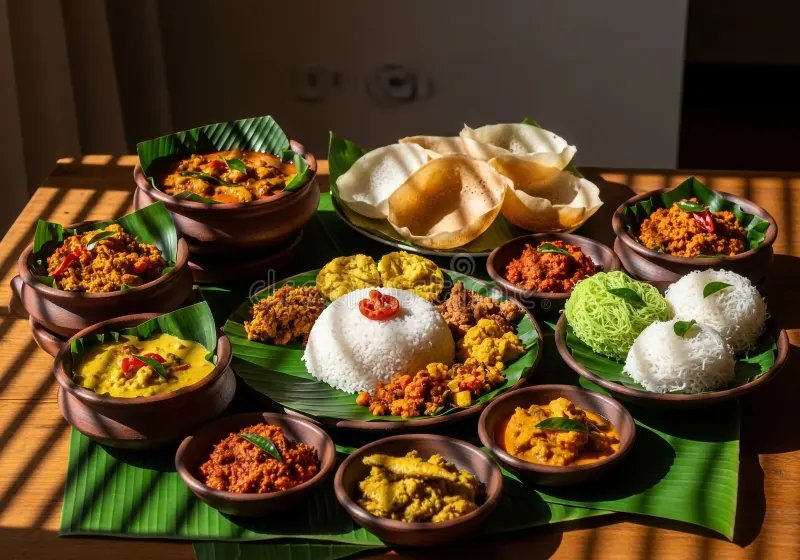
One of the greatest joys of traveling in Sri Lanka is the food. Sri Lankan cuisine is a vibrant, spice-rich culinary tradition influenced by Sinhalese, Tamil, Muslim, Dutch, and Portuguese cultures. Every meal is an explosion of flavors — fiery chilies, fragrant curry leaves, creamy coconut milk, tangy tamarind, and aromatic spices like cinnamon, cardamom, and cloves.
Whether you eat at a roadside shop, a family home, or a upscale restaurant, the food in Sri Lanka is consistently delicious and incredibly affordable. Here are 15 must-try Sri Lankan dishes that every traveler should experience.
The Essentials
1. Rice and Curry
This is the backbone of Sri Lankan cuisine and what most locals eat every single day. A typical rice and curry meal consists of a large mound of rice surrounded by 3-7 small dishes — vegetable curries, dal (lentil curry), a meat or fish curry, and various sambols and pickles. Each curry has its own distinct flavor profile, and the combination creates a perfectly balanced meal. You will find this everywhere, and a generous portion costs just $2-4 at local restaurants.
2. Kottu Roti
If there is one dish that defines Sri Lankan street food, it is kottu roti. Made by chopping godhamba roti (a flatbread) into small pieces and stir-frying it on a hot griddle with vegetables, egg, and spices, the dish is accompanied by a rhythmic clattering sound that you can hear from blocks away — the two metal blades chopping the roti against the griddle. It is savory, spicy, satisfying, and costs just $1.50-3. Available with chicken, cheese, egg, or vegetables.
3. Hoppers
Hoppers are one of Sri Lanka's most unique foods — bowl-shaped pancakes made from a batter of rice flour, coconut milk, and a pinch of sugar, cooked in a small round pan so the edges become thin and crispy while the center remains soft and spongy. Plain hoppers are eaten with sambol or curry. Egg hoppers have an egg cracked into the center during cooking. They are typically eaten for breakfast or dinner and cost around $1-2 each.
4. String Hoppers
String hoppers are made by pressing a rice flour dough through a sieve to create thin noodle-like strands that are steamed in small circular molds. They have a delicate, slightly chewy texture and are usually served with coconut sambol and a curry — often potato curry or dhal for breakfast. They are light, delicious, and found at every breakfast table in Sri Lanka.
Curries You Must Try
5. Chicken Curry
Sri Lankan chicken curry is richer and spicier than its Indian counterpart. The chicken is slow-cooked in a thick sauce made from roasted spices, coconut milk, curry leaves, rampe (pandanus leaf), and cinnamon sticks. Every family has their own recipe, and the variations are endless. A good chicken curry is deeply flavorful without being overwhelmingly hot.
6. Seafood Curry
With over 1,600 km of coastline, Sri Lanka has incredible seafood. Fresh fish, prawns, crab, and cuttlefish are transformed into aromatic curries using similar spice bases but with the addition of tangy tamarind or goraka (Garcinia cambogia) that pairs beautifully with seafood. Coastal towns like Mirissa, Hikkaduwa, and Trincomalee serve some of the best seafood curries on the island.
7. Dal (Parippu)
Dal is the most commonly eaten curry in Sri Lanka and a staple at every rice and curry meal. Made from red lentils cooked with turmeric, curry leaves, mustard seeds, and coconut milk, it is mild, creamy, and comforting. It may sound simple, but a well-made Sri Lankan dal is absolutely delicious.
Snacks and Street Food
8. Roti with Sambol
Pol roti (coconut roti) is a flatbread made with coconut and flour, cooked on a griddle until slightly charred. It is served with lunu miris (a fiery chili and onion sambol) or katta sambol. The combination of the slightly sweet roti with the spicy sambol is addictive. This is the perfect snack and costs under $1.
9. Short Eats
Short eats are Sri Lanka's answer to fast food — small pastries, rolls, cutlets, and patties sold at bakeries and street stalls across the country. Popular varieties include vegetable roti rolls, fish patties, egg rolls, and Chinese rolls (a Sri Lankan invention filled with spiced potato, fish, and sometimes chicken, then breaded and fried). They cost just $0.20-0.50 each and are perfect for a quick, cheap lunch.
10. Iso (Espresso) and Sri Lankan Coffee
Sri Lanka was once one of the world's largest coffee producers before a blight in the 19th century destroyed the industry and tea took over. Today, coffee culture is making a comeback, with specialty coffee shops opening in Colombo, Kandy, and Ella. Try a traditional Sri Lankan coffee made with locally grown beans — it is rich, dark, and full of character.
Sweet Treats
11. Wattalappam
A rich, custard-like dessert brought to Sri Lanka by the Malay community, wattalappam is made from coconut milk, jaggery (palm sugar), eggs, and spices including cardamom, cloves, and nutmeg. It is steamed until set and has a deep, caramel-like sweetness with complex spice notes. It is the perfect ending to a Sri Lankan meal.
12. Kavum (Oil Cakes)
Kavum are traditional deep-fried Sri Lankan sweets made during festivals and special occasions. The most popular variety is kiri kavum, made from rice flour, coconut milk, and treacle, shaped into diamond patterns and fried until golden. They are crispy outside and soft inside with a gentle sweetness.
13. Aluwa
Aluwa is a traditional sweet made from rice flour, treacle, and cashew nuts, set into a flat slab and cut into diamond-shaped pieces. It has a fudge-like consistency and is commonly served during Sinhalese and Tamil New Year celebrations in April.
Beverages
14. Ceylon Tea
No visit to Sri Lanka is complete without drinking Ceylon tea — the island produces some of the finest tea in the world. Visit a tea factory in Nuwara Eliya or Ella to learn how tea is processed, then enjoy a fresh cup overlooking the very plantations where it was grown. Try it black (the local way) or with milk. The difference between fresh estate tea and exported tea bags is remarkable.
15. King Coconut Water (Thambili)
The bright orange king coconut is Sri Lanka's ultimate natural refreshment. Sold at every roadside stall for about $0.40-0.60, a freshly cut king coconut provides cool, sweet, electrolyte-rich water that is far more hydrating than any bottled drink. The soft coconut flesh inside can be scooped out and eaten too. It is the perfect drink after a hot day of sightseeing.
Sri Lankan food is not something you simply eat — it is something you experience. Every meal tells a story of culture, history, and the incredible generosity of Sri Lankan people who love to feed their guests.
Where to Eat the Best Local Food
- Local "hotels" (restaurants): Look for busy places where locals eat — the food is fresh, authentic, and cheap
- Street food stalls: Especially for kottu roti and short eats in the evening
- Markets: Fresh fruit, snacks, and local sweets at the best prices
- Homestays: Many guesthouses offer home-cooked meals that are often the best food you will eat
- High-end restaurants in Colombo and Galle: For elevated interpretations of Sri Lankan cuisine
Is Sri Lankan Food Very Spicy?
Sri Lankan food can be spicy, but it is not uniformly so. Rice and curry meals typically include mild dishes like dal and potato curry alongside spicier options. You can always ask for "less spicy" (mata hiri hiri) and most restaurants will accommodate. The heat comes from fresh chilies rather than just dried spices, so it has a different quality than other cuisines.
Taste Sri Lanka with Crystal Paradise Travels
At Crystal Paradise Travels Sri Lanka, we believe food is an essential part of the travel experience. Our tours include recommendations for the best local restaurants, visits to tea factories and spice gardens, and even cooking class experiences where you can learn to make Sri Lankan dishes yourself.
Ready to eat your way through Sri Lanka? Contact us to plan a delicious journey!