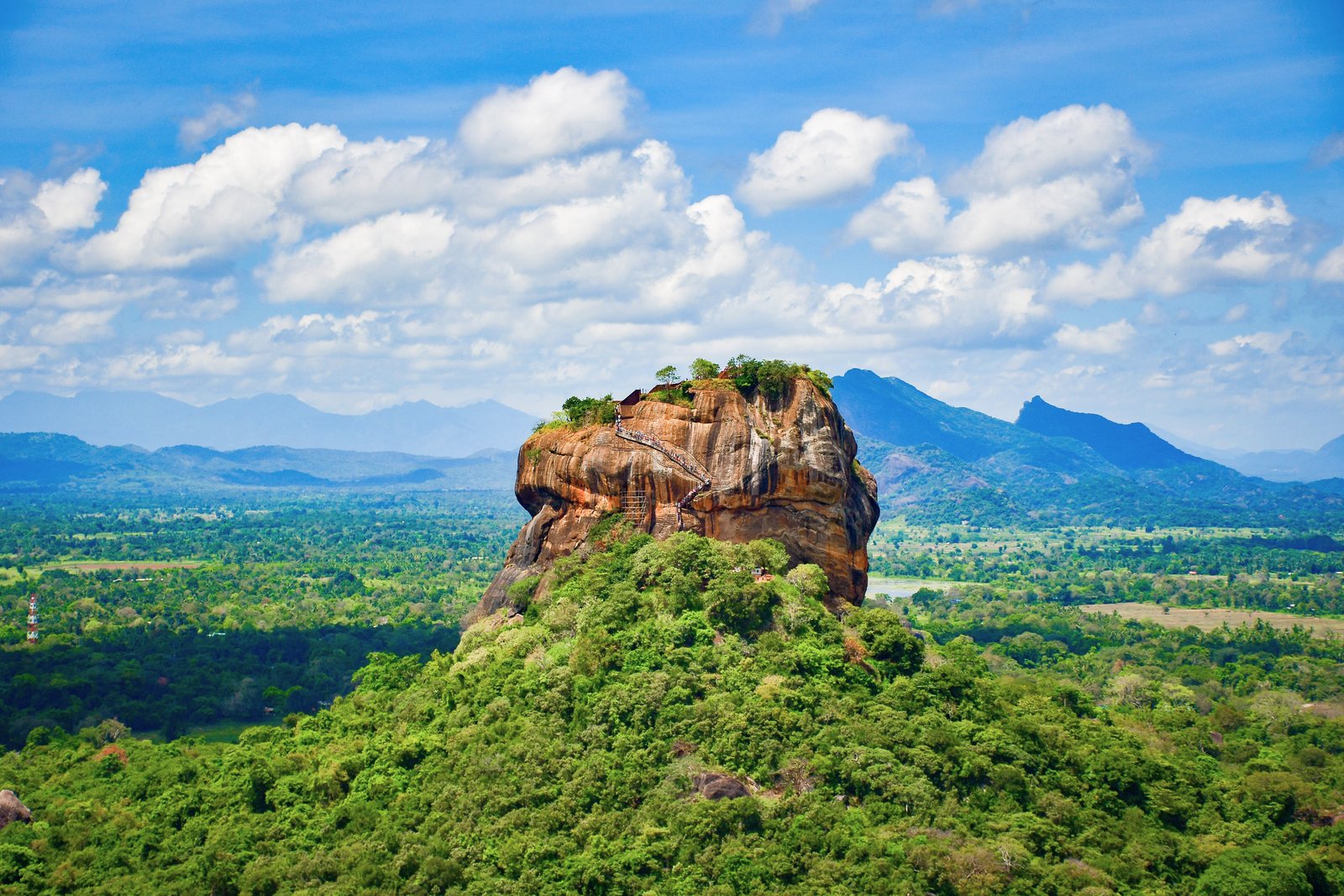
Rising 200 meters above the lush Sri Lankan jungle, Sigiriya Rock Fortress is one of the most extraordinary ancient sites in the world. Built in the 5th century by King Kashyapa I, this UNESCO World Heritage Site combines ancient engineering, breathtaking art, and dramatic natural beauty into an experience that leaves every visitor in awe.
Whether you are a history enthusiast, a photographer, or an adventurous traveler, Sigiriya deserves a prominent place on your Sri Lanka itinerary. This complete guide covers everything you need to know before visiting.
The History Behind Sigiriya
The story of Sigiriya is as dramatic as the rock itself. In 477 AD, Prince Kashyapa seized the throne from his father, King Dhatusena, by walling him alive. Fearing retribution from his half-brother Moggallana — the rightful heir who had fled to India — Kashyapa chose this massive rock as his capital and built an impregnable fortress atop it.
For 18 years, Sigiriya served as a magnificent royal citadel. Kashyapa transformed the rock into a work of art, adorning it with frescoes, landscaping elaborate water gardens at its base, and constructing a palace complex at the summit. However, in 495 AD, Moggallana returned with an army. Kashyapa rode out to battle but, mistakenly believing his forces were retreating, took his own life. Moggallana then moved the capital back to Anuradhapura, and Sigiriya was gradually abandoned to the jungle.
What You Will See During the Climb
The Water Gardens
Your Sigiriya experience begins at the base with the stunning water gardens — one of the oldest surviving landscaped gardens in the world. These sophisticated gardens feature symmetrically arranged ponds, cascading fountains that still function during the rainy season, and winding pathways surrounded by lush tropical vegetation. The engineering skill required to create these gardens over 1,500 years ago is remarkable.
The Boulder Gardens and Cave Frescoes
Past the water gardens, the path winds through a boulder garden where massive natural boulders are interconnected with pathways and ancient stone steps. Along this section, you will find the famous Sigiriya Frescoes — paintings of celestial maidens (apsaras) that once covered the entire western face of the rock. Today, 21 frescoes survive in a sheltered cavity. These 5th-century paintings are considered masterpieces of ancient Sri Lankan art, notable for their vibrant colors, graceful poses, and intricate details.
The Mirror Wall
Originally coated with a highly polished lime plaster that reflected images like a mirror, this wall runs alongside the frescoes. Over the centuries, visitors carved over 1,500 poems and comments into the wall, creating an invaluable record of ancient Sinhala literature and language. Many of these graffiti date back to the 6th–14th centuries and are considered significant historical artifacts.
The Lion Platform and Final Ascent
The most dramatic section of the climb begins at the Lion Platform, where two enormous carved lion paws mark the entrance to what was once a massive lion figure. Visitors would have entered through the lion's open mouth to begin the final staircase to the summit. Today, the lion's body is gone, but the paws remain — powerful and evocative even after 1,500 years. The final ascent involves steep iron staircases attached to the rock face, which can be daunting but is safely constructed with railings.
The Summit
Reaching the summit of Sigiriya is a genuinely rewarding experience. The flat top covers approximately 1.5 hectares and contains the ruins of King Kashyapa's palace complex, including the king's throne, council chambers, water cisterns cut into the rock, and even what is believed to be a royal swimming pool. The 360-degree panoramic views from the summit are absolutely breathtaking — stretching across jungles, lakes, rice paddies, and distant mountains in every direction.
Standing atop Sigiriya at sunrise, with the morning mist rolling across the jungle below, you understand why King Kashyapa chose this extraordinary place as his kingdom in the sky.
Practical Visitor Information
- Entry Fee: USD 30 for foreigners, USD 15 for SAARC countries, USD 15 for children
- Opening Hours: 6:30 AM to 5:30 PM daily
- Climb Duration: 45 minutes to 1.5 hours depending on fitness and crowd levels
- Total Steps: Approximately 1,200 steps including iron staircases
- Difficulty: Moderate — the final section near the lion paws is steep and narrow
Best Time to Climb Sigiriya
Early morning (6:30–8:00 AM) is by far the best time to climb. The temperatures are cool, the light is soft and ideal for photography, and you avoid the large tour groups that arrive mid-morning. After 10 AM, the rock face becomes very hot and crowded, significantly reducing the enjoyment of the experience.
The dry season from December to April offers the most reliable weather for climbing. During the monsoon months, the rock steps can be slippery.
Tips for Your Sigiriya Visit
- Bring at least 1.5 liters of water per person — there are no water stations on the rock
- Wear shoes with excellent grip — the final iron stairs are steep and can be slippery
- Apply sunscreen and wear a hat — shade is minimal on the rock face
- Photography with flash is prohibited near the frescoes to protect the ancient pigment
- Leave heavy bags at the base — you will want your hands free for the climb
- Consider hiring a licensed guide at the entrance for detailed historical commentary
- Combine your visit with Pidurangala Rock for the best photo angle of Sigiriya
Pidurangala Rock vs Sigiriya
Many travelers ask whether to climb Sigiriya or Pidurangala. The answer is both if possible. Sigiriya offers the rich historical experience, frescoes, and summit palace ruins. Pidurangala, located just 2 km away, is a simpler climb but offers the most spectacular view of Sigiriya Rock — the iconic photograph you see on every Sri Lanka travel poster. Pidurangala is also where you should go for sunrise, as the view facing east is extraordinary.
Visit Sigiriya with Crystal Paradise Travels
Crystal Paradise Travels Sri Lanka includes Sigiriya in most of our cultural and heritage tour packages. We arrange early morning departures so you arrive at the rock before the crowds, provide experienced guides who bring the history to life, and combine your visit with nearby attractions like Dambulla Cave Temple, Pidurangala Rock, and Minneriya National Park.
Plan your Sigiriya visit with us — contact Crystal Paradise Travels today!